

Inground Pool Ownership Guide for Busy Families
A pool should be where your family cools off after a long summer day, not where you spend Saturday morning chasing a cloudy-water problem or a pump that will not start. This inground pool ownership guide focuses on the practical responsibilities that protect your investment, keep swimmers safe, and help your pool stay ready when you want to use it.
For homeowners in Northern Virginia, Washington, DC, and Maryland, pool care changes quickly with the weather. Spring pollen, summer storms, falling leaves, and winter freezes all place different demands on the water and equipment. Consistent attention is what keeps small issues from becoming expensive repairs.
Inground Pool Ownership Starts With a Routine
An inground pool has several systems working together: circulation, filtration, sanitation, plumbing, heating, and electrical components. When one area is neglected, the effects often show up somewhere else. Low water flow can make chemical treatment less effective. A dirty filter can strain the pump. Unbalanced water can damage surfaces, heaters, and metal equipment.
The most reliable approach is preventative maintenance. Weekly service typically includes skimming debris, emptying skimmer and pump baskets, vacuuming or brushing the pool, checking water level, testing chemistry, and inspecting visible equipment. These tasks may sound simple, but timing and follow-through matter. Leaves left in a pool can stain surfaces and clog circulation. A minor leak can become a plumbing issue. A drifting pH level can affect swimmer comfort and equipment longevity.
If you prefer to handle some care yourself, create a set weekly schedule rather than waiting for the water to look dirty. Clear water is a good sign, but it does not always mean the chemistry is safe or the equipment is operating correctly.
Keep circulation moving
Your pump and filter are the working center of the pool. They move water through the filter, distribute chemicals, and help prevent algae growth. Run time depends on pool size, bather load, weather, equipment efficiency, and whether the pool has a heater or variable-speed pump. There is no single schedule that works for every backyard.
Pay attention to changes in return-jet pressure, unusual pump noise, air bubbles in the pump basket, or water that seems to stop circulating well. These can point to a dirty filter, a clogged basket, a suction-side air leak, or another issue that deserves attention before the equipment is damaged.
Water Chemistry Is About More Than Clear Water
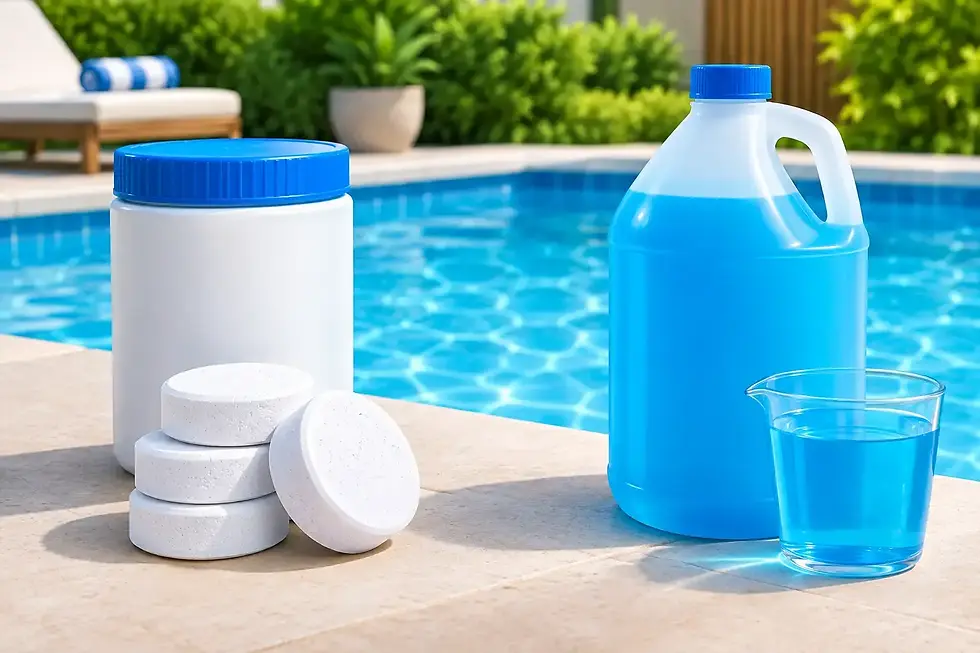
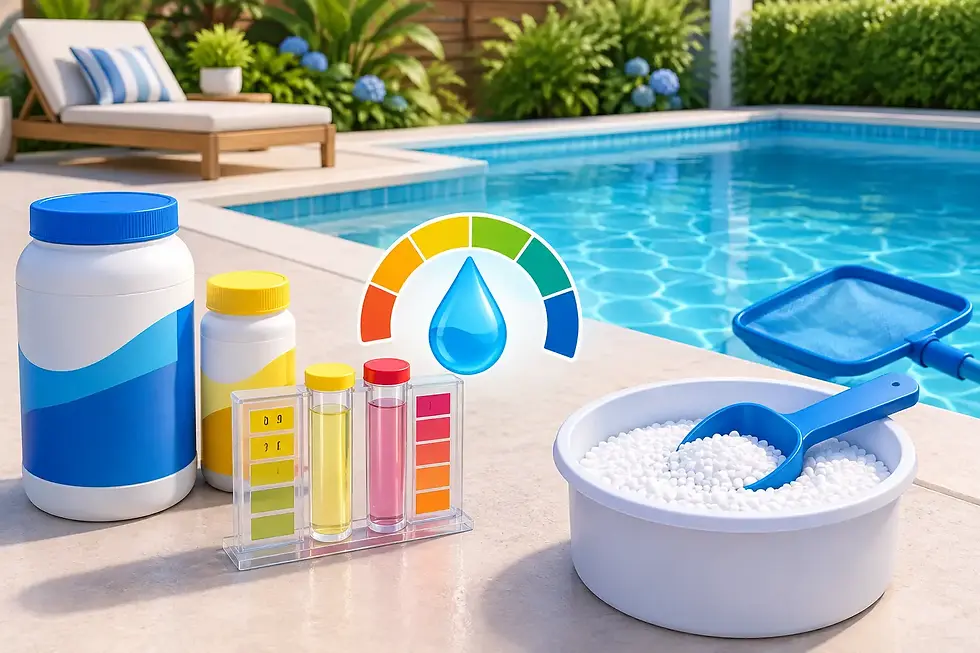
Pool water should be balanced for the people using it and the materials that hold and circulate it. Chlorine or another sanitizer helps control bacteria and algae, while pH, alkalinity, calcium hardness, and stabilizer levels affect how well that sanitizer performs and how the water interacts with equipment and surfaces.
Testing only when the water turns green is too late. Rain, heavy use, sunscreen, pollen, and high temperatures can shift water chemistry fast. A pool full of guests on a hot weekend may need different treatment than the same pool during a quiet week.
Improper chemistry can lead to eye and skin irritation, cloudy water, algae, scale buildup, corrosion, and premature wear on heaters and other components. Adding chemicals without knowing current readings can create a second problem while trying to solve the first. Test results should guide every adjustment.
Homeowners should also store pool chemicals carefully. Keep them dry, secured, and away from children, pets, heat sources, and incompatible products. Never mix chemicals together, and always follow product handling instructions. When in doubt, let a trained technician make the adjustment safely.
Protect the Equipment You Cannot Easily See
The visible pool is only part of the investment. Beneath the deck and inside the equipment area are plumbing lines, valves, electrical connections, the pump, filter, heater, and possibly automation equipment or a salt system. A repair is usually easier and less disruptive when it is caught early.
During routine inspections, look for wet ground near equipment, dripping fittings, cracked lids, corroded connections, error codes, or a heater that cycles off unexpectedly. Do not ignore a rising water bill or a pool that needs frequent refilling. Evaporation is normal during warm weather, but a persistent water-level drop can signal a leak.
Filters deserve regular attention as well. Sand, cartridge, and DE filters have different maintenance needs, so cleaning intervals should follow the equipment type and pressure readings rather than a guess. Over-cleaning or improperly cleaning a filter can be just as unhelpful as neglecting it. A professional inspection can confirm whether the filter media, grids, cartridges, seals, and internal parts are doing their job.
Leave electrical and heating repairs to qualified professionals
Pool equipment combines water, electricity, gas or heat-pump systems, and high-pressure circulation. That is not a good place for trial-and-error repairs. If a breaker trips repeatedly, a pump will not prime, a heater displays a fault code, or you smell gas near equipment, stop using the affected system and contact a qualified pool professional.
Prompt service protects your family and can prevent a smaller repair from turning into a pump replacement, heater failure, or damaged plumbing line.
Seasonal Care Matters in the Mid-Atlantic
A pool in this region needs a deliberate opening and closing process. The shoulder seasons are especially important because temperatures can swing widely, and a few warm days can encourage algae before the pool is fully opened.
At spring opening, the cover should be removed carefully, debris cleared, equipment reconnected, and the system inspected before regular use. Water chemistry, filter condition, circulation, and heater operation all need attention. Starting the season with clean, balanced water helps avoid spending the first warm weekends correcting problems.
During fall, do not wait until the last possible minute to plan your closing. A proper winterization protects plumbing and equipment from freeze damage. Depending on the pool, the process may include lowering the water to the appropriate level, balancing water, cleaning the pool, removing or protecting accessories, blowing out return and suction lines, adding winterizing materials, and securing the cover.
A cover is a safety and maintenance tool, not an afterthought. Inspect it for damage, secure it correctly, and remove accumulated leaves or standing water as appropriate for its design. A neglected cover can create hazards and allow unnecessary debris into the pool.
Know When Professional Pool Care Pays Off
Many homeowners enjoy handling basic skimming and visual checks. The question is not whether you can do every task yourself. It is whether you have the time, equipment knowledge, and consistency to keep the entire system healthy through every season.
Professional maintenance is especially valuable when water problems return, equipment behaves inconsistently, your schedule makes weekly care difficult, or you are new to pool ownership. A dependable provider can monitor chemistry trends, spot developing equipment concerns, clean the pool thoroughly, and handle repairs without asking you to spend your weekend diagnosing a problem.
For busy households, recurring service also provides accountability. Instead of wondering whether the filter was checked or whether the water was balanced after a storm, you have a trusted partner focused on keeping the pool clean, safe, and functional. Tortuga Pool Services helps homeowners protect their pool investment with maintenance, repair, seasonal service, and equipment-focused care.
The best pool days are usually the ones that require no last-minute troubleshooting. Give your pool steady attention, address small changes early, and keep qualified help available for the jobs that demand technical experience. Then when the weather is right, you can simply jump in - the water’s fine.

Comments