

How to Balance Pool Alkalinity Without Guesswork
A pool can look clear and still be out of balance. When total alkalinity drifts too low or too high, the first clues are often subtle: pH readings that will not hold, irritated eyes, scale around tile, or equipment that seems to need constant attention. Knowing how to balance pool alkalinity helps protect the water, the people using it, and the investment sitting in your backyard.
For busy homeowners in Northern Virginia, Washington, DC, and Maryland, the goal is not to turn every weekend into a chemistry project. It is to understand what the test results mean, make measured corrections, and recognize when a stubborn problem deserves professional attention.
What Pool Alkalinity Actually Does
Total alkalinity, usually shown as TA on a test kit or digital reader, measures the water's ability to resist sudden pH changes. Think of it as a buffer. Proper alkalinity keeps pH from swinging sharply after rain, heavy swimming, chlorine additions, or normal water circulation.
Alkalinity and pH are related, but they are not the same measurement. pH tells you whether the water is currently acidic or basic. Total alkalinity tells you how stable that pH is likely to be. Adjusting pH without checking alkalinity can create a cycle of repeated chemical additions that never quite solves the underlying issue.
For many residential pools, a total alkalinity reading of 80 to 120 parts per million (ppm) is a practical target range. Some saltwater pools and certain equipment setups perform better at the lower end of that range, often around 60 to 80 ppm. Your pool surface, sanitizer, heater, and chemical products can all affect the ideal target, so follow the equipment manufacturer’s guidance when it differs.
Test Before You Treat
Accurate testing is the first step in how to balance pool alkalinity. Use a reliable liquid test kit, a well-maintained digital tester, or a professional water analysis. Test strips are convenient for a quick check, but they can be harder to read precisely when the water needs correction.
Take the sample away from return jets and skimmers, preferably at elbow depth. Then check total alkalinity, pH, sanitizer level, and calcium hardness together. A result only makes sense in context. For example, unusually high pH may point toward high alkalinity, but it can also be influenced by aeration, a salt chlorine generator, fresh plaster, or swimmer load.
If your reading is only slightly outside the target range and the pH is stable, avoid overcorrecting. Small adjustments followed by retesting are safer than adding a large dose based on a single result. Pool water responds over time, especially when circulation, weather, and other chemicals are involved.
How to Raise Low Pool Alkalinity
Low alkalinity often makes pH difficult to control. You may notice that pH drops after rain or seems to change every time you add chlorine. Water with low TA can become corrosive over time, potentially affecting plaster, grout, metal components, pump seals, heater parts, and other equipment.
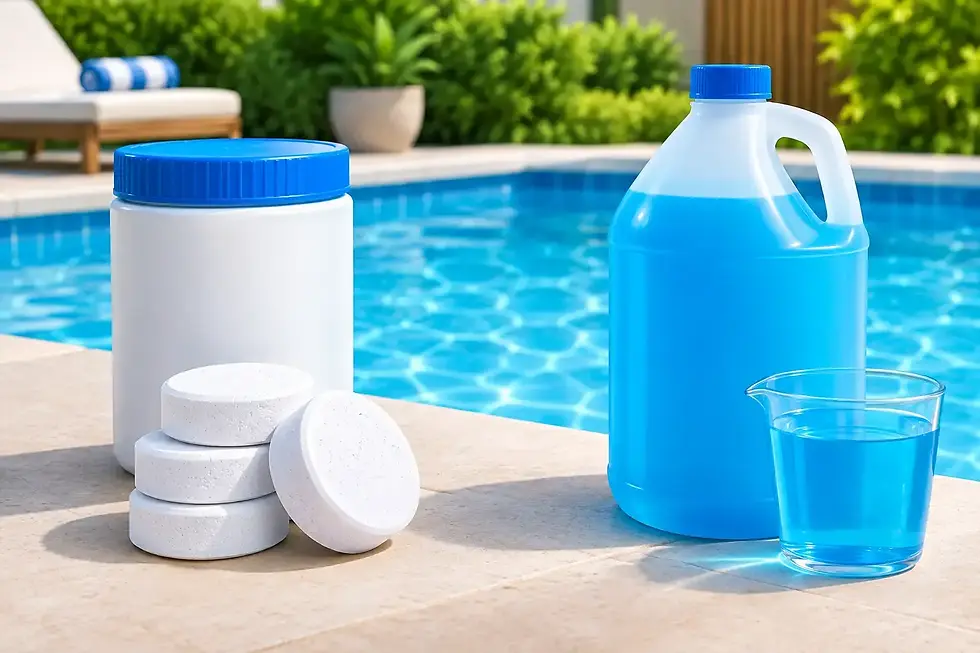
Sodium bicarbonate, commonly sold as an alkalinity increaser, is the standard product for raising total alkalinity. While baking soda is chemically similar, use a pool-specific product or confirm the product is plain sodium bicarbonate with no additives. The amount required depends on your pool’s volume and current test result, which is why guessing is costly and unreliable.
With the circulation system running, add the measured product gradually across the deep end or broadcast it over the water surface according to the label directions. Do not dump a large pile in one location. Allow the water to circulate thoroughly, then retest after the recommended waiting period, often several hours or the next day.
Raise alkalinity in stages when the reading is significantly low. A large correction can push pH upward or leave undissolved material on the pool floor. If you have a vinyl liner or a delicate surface, careful application matters even more.
How to Lower High Pool Alkalinity
High alkalinity is common in areas with hard source water and can be especially frustrating because pH tends to drift upward. You may see cloudy water, scale on tile and fixtures, rough-feeling surfaces, reduced heater efficiency, or white buildup around returns. Left unchecked, scale can restrict water flow and shorten the life of expensive equipment.
Lowering total alkalinity usually requires an acid product, commonly muriatic acid or dry acid. These materials are effective, but they need to be handled with care. Wear appropriate protective equipment, keep chemicals away from children and pets, never mix products, and always follow the specific label instructions.
The process is more deliberate than simply pouring in acid until the test result changes. Acid lowers both pH and alkalinity. After an acid dose lowers pH, controlled aeration can bring pH back up without raising total alkalinity. Repeating that cycle gradually lowers TA while keeping water within a safe operating range.
Aeration may come from aiming return jets upward, running a water feature, using spa jets, or allowing normal splashing during supervised use. The exact approach depends on the pool and its equipment. Because aggressive acid treatment can damage surfaces, corrode metal, and create unsafe water conditions, it is often wise to have a trained technician manage persistently high alkalinity.
Never add acid and chlorine at the same time or in the same place. Keep additions separate, circulate the water between treatments, and store products securely in their original containers. Chemical safety is part of protecting your family as well as your pool.
Common Reasons Alkalinity Keeps Changing
A one-time correction is straightforward. Repeated imbalance usually points to a condition worth investigating. Heavy rain can dilute water and shift chemistry. Frequent use of acidic chlorine tablets can lower both pH and alkalinity over time. Fresh fill water may contain high alkalinity or hardness, while splash-out and evaporation can alter the balance in different ways.
Equipment and pool features matter, too. Salt chlorine generators, spas, waterfalls, fountains, and spillovers increase aeration and can cause pH to rise more quickly. A new plaster finish may also raise pH during its curing period. In each case, the right response is not necessarily more chemical. It may be a revised testing schedule, a different sanitizer approach, or an adjustment to how the equipment runs.
This is why dependable maintenance includes more than skimming and vacuuming. Consistent water testing, filter care, circulation checks, and equipment inspections reveal patterns before they turn into cloudy water, scale, corrosion, or a no-swim weekend.
A Sensible Routine for Stable Water
During swim season, test alkalinity at least weekly and test pH and sanitizer more often, especially after storms, parties, heat waves, or major chemical adjustments. Record results in a simple log. A few readings over several weeks can show whether your pool is steadily drifting in one direction.
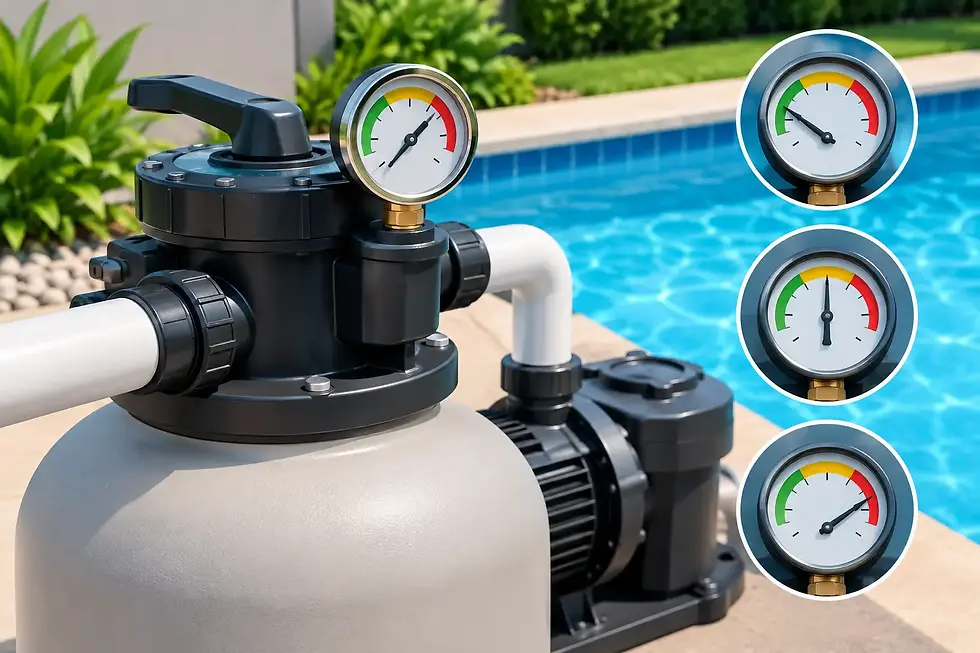
Keep the pump running long enough to circulate chemicals completely, and clean the filter on schedule. Poor circulation can produce misleading water conditions because chemicals do not distribute evenly. It can also allow debris and organic contamination to consume sanitizer faster.
If you are opening a pool in spring, closing it for winter, refilling after repairs, or dealing with recurring scale or corrosion, consider a complete water assessment rather than treating a single number. Total alkalinity works alongside pH, calcium hardness, chlorine, stabilizer, and temperature. The best correction protects the whole system.
When water chemistry keeps demanding attention, Tortuga Pool Services can provide the dependable testing, measured adjustments, and equipment-focused care that save you valuable time. A balanced pool should support the reason you own it: clear water, reliable equipment, and more relaxed time with family and guests.

Comments