
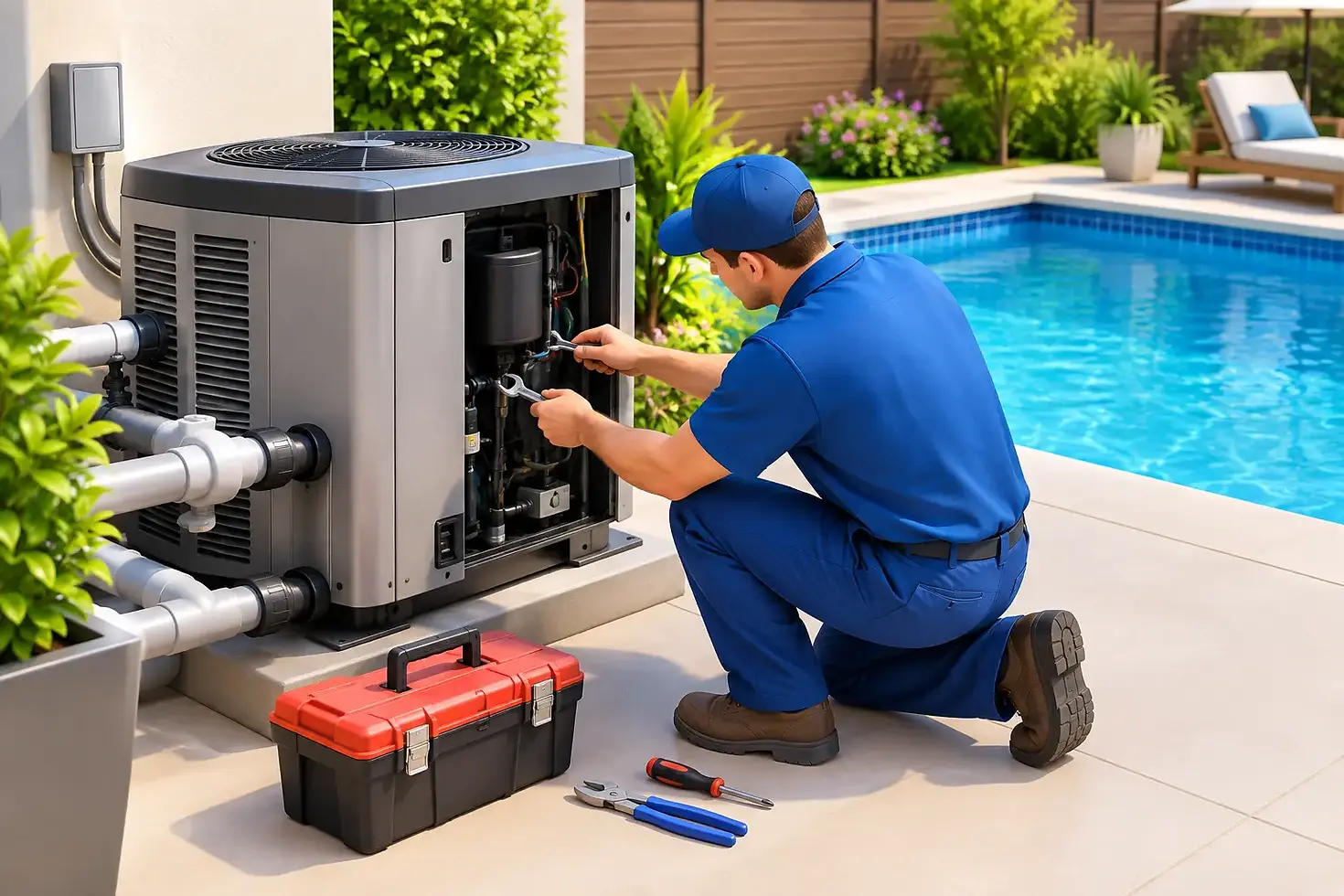
When to Call a Pool Heater Repair Service
A pool heater can seem fine right up until the first cool weekend when your family is ready to swim. Then the water will not warm, the heater shuts off after a few minutes, or an unfamiliar error code appears on the display. A professional pool heater repair service identifies what is actually stopping the system from working, protects connected equipment, and helps you get back to enjoying the pool instead of troubleshooting it.
For homeowners across Northern Virginia, Washington, DC, and Maryland, heating problems deserve timely attention. Our changing spring and fall temperatures make a reliable heater especially valuable, and freezing conditions can turn a small plumbing or equipment issue into a more expensive repair if it is left unresolved.
Common Signs Your Pool Heater Needs Service
A heater that will not start is the most obvious problem, but it is not the only reason to call for help. Pool heaters are designed with safety controls that prevent operation when water flow, gas supply, electrical power, ventilation, or internal temperatures are outside acceptable limits. The heater may be protecting itself, but the cause still needs to be found.
Watch for a heater that runs but never raises the water temperature, cycles on and off repeatedly, makes banging or rumbling noises, leaks water, or gives off a gas odor. Rust around the cabinet, a damaged vent, black soot near a gas heater, and recurring error messages also call for professional attention. Do not keep resetting the unit in hopes that it will stay running. Repeated resets can mask a developing problem and may put added strain on components.
A pool that is heating slowly is also worth checking. Sometimes the issue is simple, such as a dirty filter limiting water flow. In other cases, a scaled heat exchanger, failing thermostat, weak circulation pump, undersized heater, or heat loss from an uncovered pool may be involved. The right repair starts with a complete look at the system rather than replacing a part based on one symptom.
Why Pool Heater Problems Are Not Always Heater Problems
Your pool heater relies on the rest of the equipment pad. Water must move through the system at the correct rate, the filter must be reasonably clean, valves must be positioned correctly, and the electrical or gas supply must be stable. A heater error code may point to low flow, but low flow can originate with a clogged skimmer basket, dirty filter, worn pump, closed valve, or plumbing restriction.
That is why experienced technicians inspect the full operating path. They check circulation, water pressure, controls, sensors, connections, and the equipment surrounding the heater. This approach helps prevent a frustrating cycle where a heater part is replaced, only for the same alert to return because the real cause was elsewhere.
Water chemistry matters, too. Low pH, low calcium hardness, and unbalanced alkalinity can create corrosive water conditions. Over time, that water can damage internal heater surfaces and shorten the life of an expensive heat exchanger. Excess calcium can cause scale buildup, reducing heating efficiency and restricting water movement. Routine testing and chemical adjustment are not separate from heater care - they are part of protecting the equipment that keeps your pool comfortable.
What a Pool Heater Repair Service Should Check
A proper service visit begins with the homeowner's observations. Knowing when the problem started, whether it occurs only at certain times of day, and what messages appear on the control panel can speed up diagnosis. From there, the technician should safely inspect the heater and the connected pool equipment.
For a gas heater, service may include checking ignition components, burners, gas supply, pressure switches, temperature sensors, wiring, safety switches, exhaust venting, and the heat exchanger. A technician will also look for signs of corrosion, water leaks, soot, or improper combustion. Gas-related concerns should always be handled by a qualified professional. If you smell gas, turn the heater off, move away from the area, and contact the appropriate service professional or gas utility as needed.
For an electric heat pump, the inspection may focus on power supply, breakers, wiring, fan operation, refrigerant-system performance, airflow, sensors, and the control board. Heat pumps work by pulling warmth from the surrounding air, so cool outdoor temperatures naturally affect their output. A heat pump may take longer to warm the pool on a chilly day without necessarily being defective. However, tripped breakers, ice buildup, unusual noise, or failure to start are not normal conditions to ignore.
Solar heating systems and their plumbing need their own evaluation. Leaks, valve problems, roof-panel issues, control malfunctions, and circulation concerns can all reduce performance. Because a pool heater system varies by fuel type, age, and installation, the most dependable repair plan is one based on the specific equipment in front of the technician.
Repair or Replacement: How to Make the Right Call
Not every heater issue means it is time for a new unit. A failed sensor, pressure switch, igniter, capacitor, relay, thermostat, or plumbing fitting can often be repaired at a reasonable cost. Restoring proper water flow or correcting water chemistry may solve the concern without major parts replacement.
Replacement becomes more practical when a heater has extensive corrosion, a cracked heat exchanger, repeated failures, unavailable parts, or a repair estimate that is too large relative to the unit's age and condition. Efficiency is part of the decision as well. An older heater may still operate, but it can cost more to run and may struggle to maintain your preferred water temperature.
There is no single age at which every heater should be replaced. Installation quality, maintenance history, water balance, winterization, usage, and local conditions all matter. A trustworthy technician should explain the condition of your existing equipment, the likely repair outcome, and the trade-offs between repairing and replacing. That gives you clear information to protect your investment instead of pressure to make a rushed choice.
Preventing Heater Trouble Before Swim Season
The best time to find a heating issue is before guests arrive and before you have planned a weekend around the pool. During spring opening, have the circulation system, filter, pump, plumbing, controls, and heater checked as the pool is brought back into service. Testing the heater early allows time to address a weak component or performance concern before consistent warm weather arrives.
Throughout the season, keep water chemistry within recommended ranges, clean skimmer and pump baskets, maintain the filter, and pay attention to changes in the heater's sound or runtime. If the heater requires adequate flow, do not overlook a pressure change at the filter or reduced return flow at the pool. Those conditions affect more than water clarity.
At closing time, proper winterization is especially important in this region. Water left in vulnerable heater or plumbing components can freeze, expand, and cause serious damage. A careful closing process that addresses return lines, equipment, and drainage helps reduce the risk of an unpleasant surprise when spring returns.
Choose a Service Partner Who Sees the Whole Pool
A heater is one part of a larger pool system, and service is more effective when the technician understands how every part works together. The right provider can address heating concerns while also evaluating water balance, circulation, filtration, electrical connections, plumbing, and seasonal needs. That coordinated care saves valuable time and can help catch smaller problems before they interrupt your pool season.
Tortuga Pool Services provides homeowner-focused pool care built around dependable maintenance, equipment expertise, and clear recommendations. Whether your heater needs a targeted repair or your entire equipment pad needs attention, the goal is the same: keep your pool safe, functional, and ready for the people who enjoy it.
A warm pool should make an ordinary evening feel more inviting. If your heater is sending warning signs, schedule service before a small interruption has the chance to become a larger repair.


Comments